Dispatch & Communications
|
|
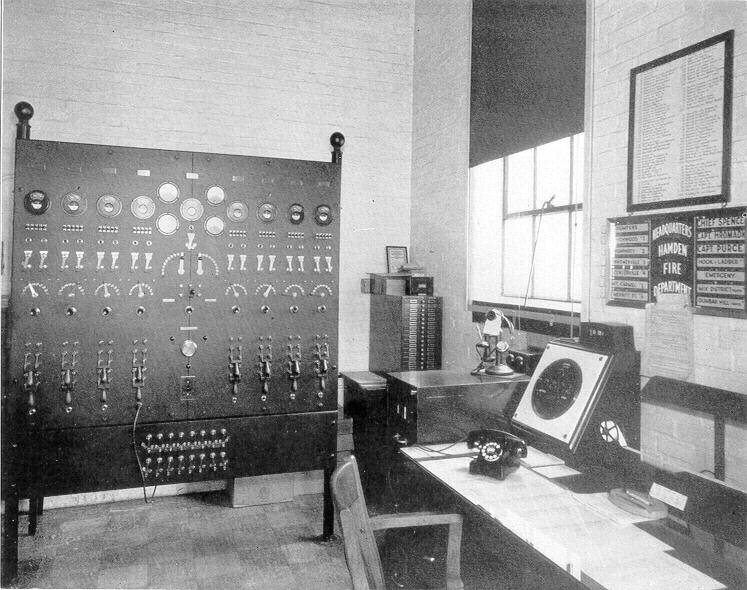
The Alarm Room at Station 4 was built when the fire station was reconstructed in 1939-40. The alarm system was moved from Station 2 to Station 4 in May of 1941.
The circuit board pictured in the background was for the Gamewell telegraph alarm system. It was replaced by a newer console in the late 1960s. The Gamewell system remained a part of the town-wide fire alarm system until the early 1990s. Note the old-fashioned "candlestick" telephone sitting on the file cabinet and the wooden magneto ringer box mounted on the back wall. These instruments were part of the inter-station communications system that was replaced in 1981, when SNET installed the Horizon telephone system as part of the conversion to Central Communications.
Inaugurated on November 19, 1981, Central Communications combined dispatching for fire and police in the basement of the former Miller Library building.
|
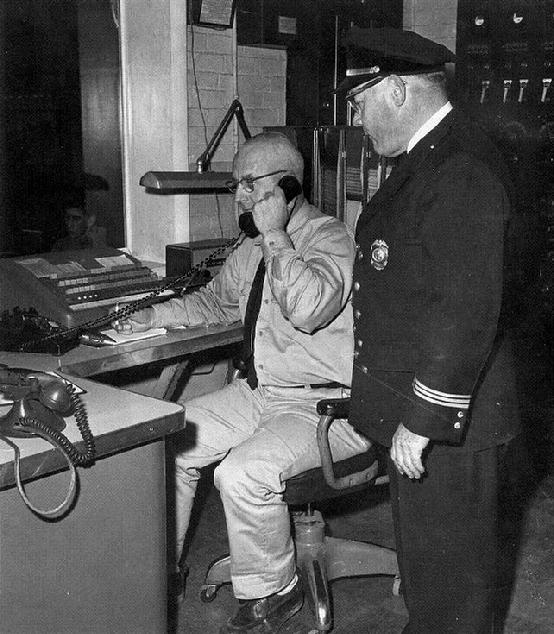 |
| 1963 - Chief Dispatcher Wilbur Baker answers the telephone while D/C Training Officer Daniel Hume looks on. The window between the Alarm Room and the apparatus floor was added in the late 1950s. (Vaccaro photo) |
|
|
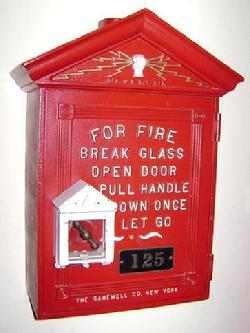 |
| CLICK IMAGE FOR MORE ON HAMDEN'S GAMEWELL ALARM SYSTEM |
|
|
 |
| CLICK FOR MORE ON HAMDEN TELEPHONE SERVICE IN THE EARLY DAYS OF THE HFD |
|
|
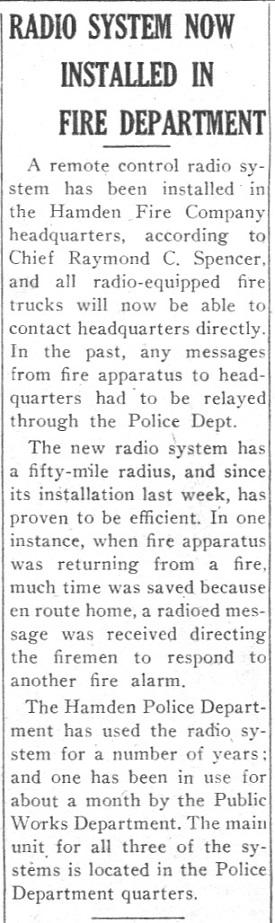 |
| December 27, 1946 - We get radios! |
|
|
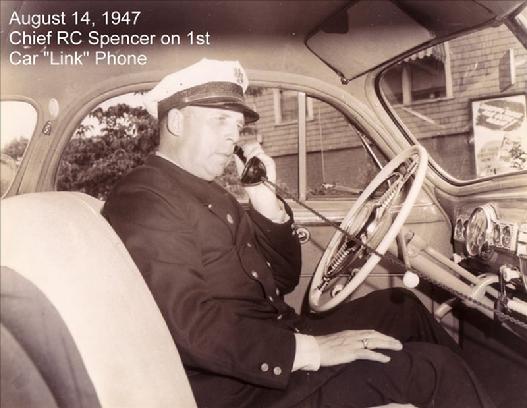 |
| Photo courtesy of Local 2687 |
|
|
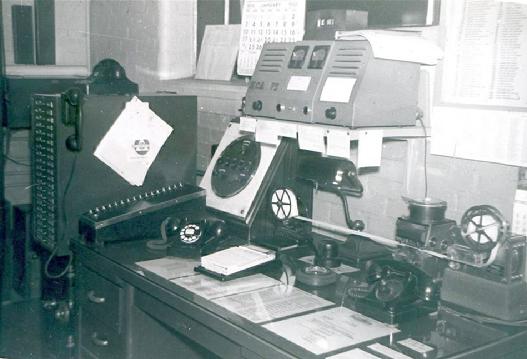
Below is how the Alarm Room at Fire Headquarters was configured in January 1954. The four separate telephones were most likely for the emergency, non-emergency, dispatch and direct PD lines. A small table top switchboard was installed a few years later. CLICK to enlarge.
Posted 5/6/11
|
 |
| CLICK to enlarge |
|
|
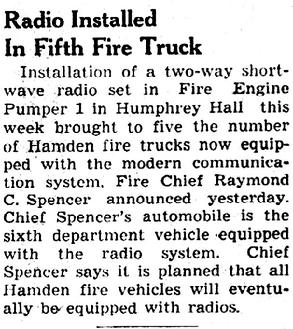 |
| The Hamden Chronicle, February 19, 1953 |
|
|
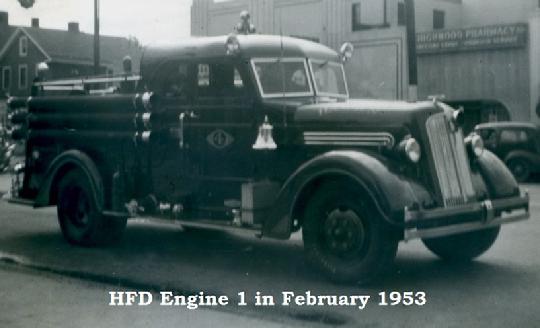 |
| February 1953 - Hamden's 1938 Seagrave "canopy-cab" was the fifth piece of apparatus to have a two-way radio installed. (Brainard photo) |
|
|
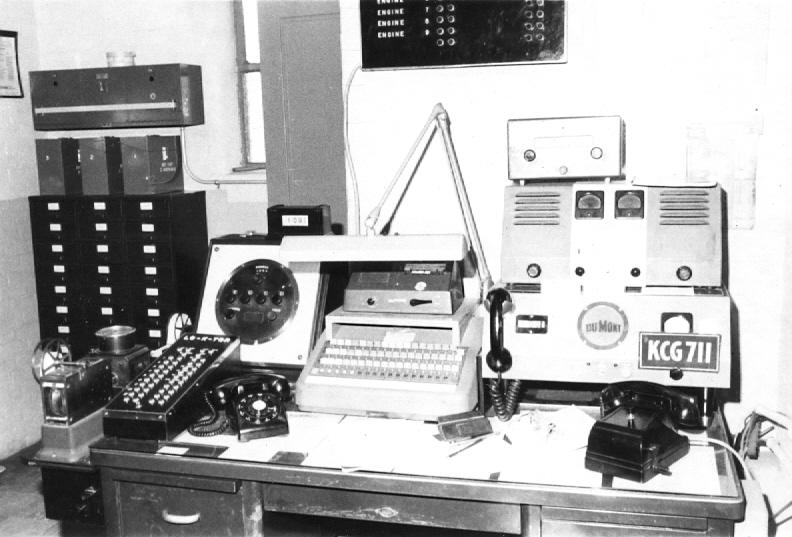 |
| Early 1960s |
|
|
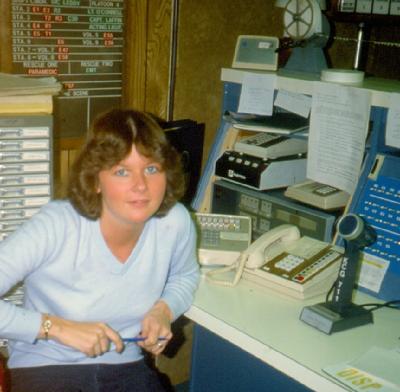 |
| Dispatcher Carol Conway, one of eleven original Central Communications dispatchers. |
|
"Attention, stand by for a dispatch . . ."
Thirty
years ago, on November 19, 1981, 9-1-1 service came to Hamden. With a total of
eleven cross-trained civilian dispatchers, the
dispatch facilities of the Hamden fire and police departments were
combined into one unit called "Central Communications."
When Hamden or North Haven
residents with telephone prefixes of 248, 281 or 288 dialed 9-1-1, their
calls were answered at Hamden's public safety answering position (PSAP)
at Central. North Haven residents with Hamden telephone prefixes had their 9-1-1 calls forwarded manually to North Haven.
9-1-1 calls from Hamden residents with New Haven prefixes (562, 624, 777, etc.) were answered at New Haven, then forwarded to Hamden. The introduction of Enhanced 9-1-1 in 1988 enabled the telephone company to have all Hamden residents' 9-1-1 calls answered at Central.
Central Communications was located in the basement of the old Miller Memorial
Library. The facility was renovated and enlarged in 1990. It will soon move to the new
annex of the old Memorial Town Hall.
|
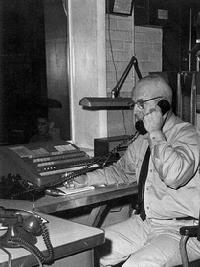 |
| 1963 - Dispatcher Wilbur Baker in the Alarm Room |
|
Before
Central Communications, all Hamden fire dispatching was
performed in the "Alarm Room," a small room up a few stairs at the rear of the apparatus floor at Station 4. The fire dispatchers, each assigned to a platoon, were
all experienced uniformed members of the Hamden Fire Department.
The
Comprehensive Employment Training Act (CETA), enacted in the mid-1970s, provided federal funding to municipalities to hire and train
unemployed
individuals to fill various positions. In 1976, Hamden hired
civilian fire dispatchers under the CETA program. The uniformed Hamden
firefighters previously
responsible for dispatching, Ray Carofano, Wilbur Baker, Russ Norman and
Bob "Ace" Callahan, all of them on the job for decades, were
placed back on the line.
Eventually, four full-time civilian fire dispatchers were
hired and assigned to work the same 42-hour work schedule as the firefighters,
3-on-3-off. However, their schedules were not in sync with the four platoons. A
civilian dispatcher's first day (or night) on duty was always the last
day (or night) of the platoon.
When the Hamden Fire Department's
four dispatchers moved over to Central Communications, they joined four Hamden Police
Department dispatchers and three additional employees, all civilians,
working a 40-hour week on three eight hour shifts. Eventually, all eleven were cross-trained in fire and police dispatch procedures.
|
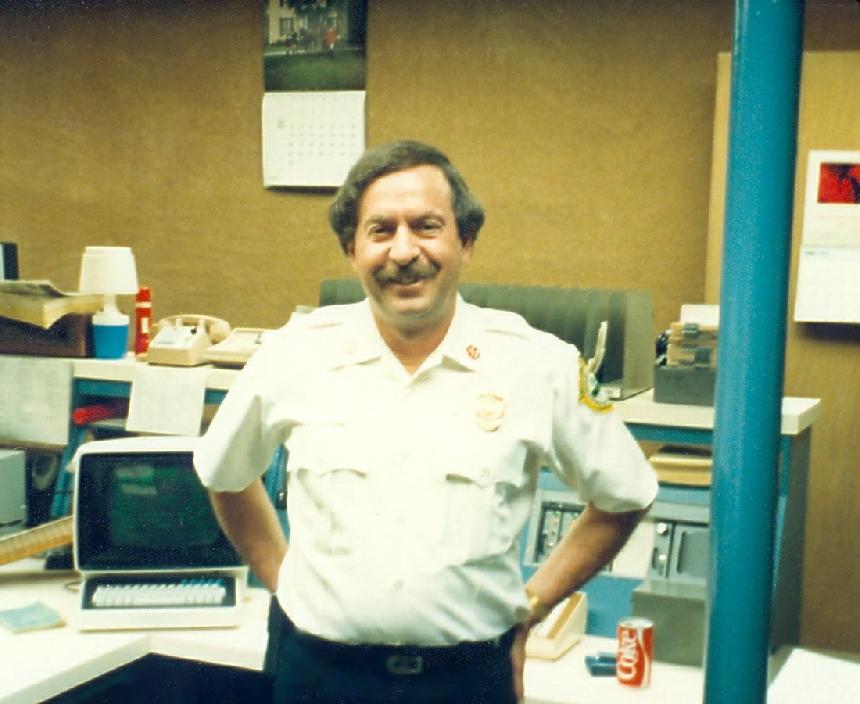 |
| May 1982 - Dep. Chief/Training Officer John Tramontano in Central Communications' Original Location |
|
|
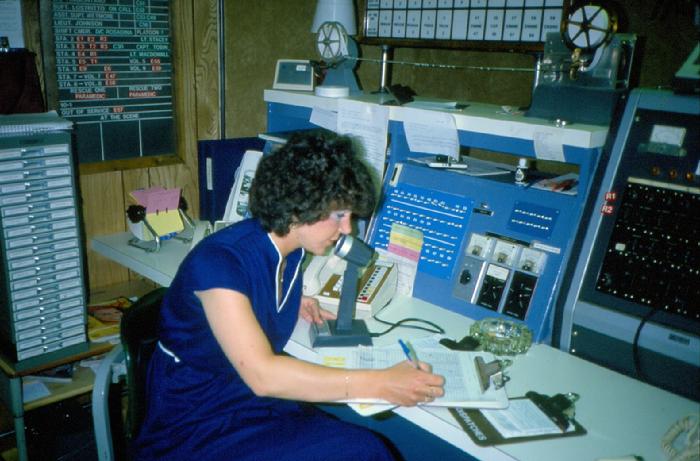 |
| 1982 - Central Communications dispatcher Marge Gambardella, now Marge Yacano, at the fire dispatch position in the original location of Central Communications (Photo by John Tramontano) |
|
|
|