Hamden Fire Retirees Association, Inc.

Staying Connected · Preserving Our Past

HOME

About Us

All Past Updates

Alumni

Apparatus

Calendars

Civil Defense

Communications-Dispatch

Fires & Other Emergencies

Fire Stations

Hamden C.E.R.T.

C.E.R.T.

Hamden Historical Society

Hamden Then & Now

HFD Shift Assignments

H.G.S.R.A.

Historical Notes

Index - Archives Articles

Mountain Rescue Team

Off Duty Time

Parades

Photos

Public Education

Rosters

Sparking Out

Special Events

Training

Videos

We Remember

Web Links

1995 World Games

M E M B E R S O N L Y

Opinion

Why I’ve drafted instructions to give the ventilator to someone else: Paul Keane

Posted Mar 22, 2020


By Guest Columnist, cleveland.com

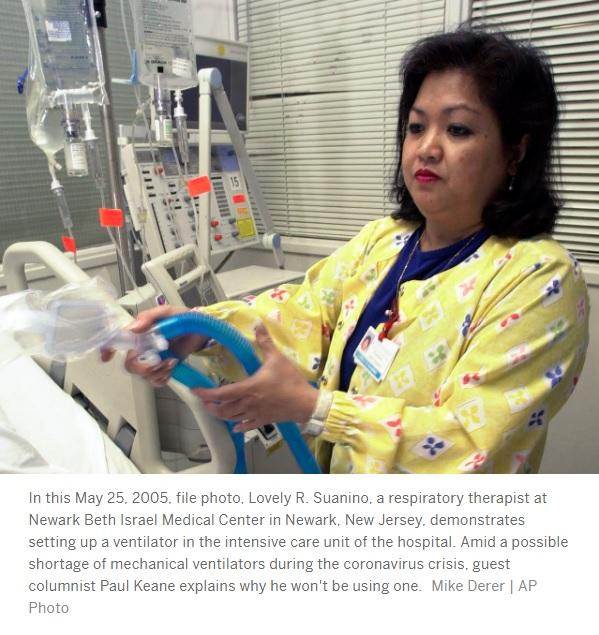
WHITE RIVER JUNCTION, Vermont -- In this coronavirus pandemic, I will not be depriving a younger person of a ventilator, also known as a breathing machine. I am 75, have lived a wonderful life, and am ready for nature to take her course, even though I am vigorous and healthy and reasonably cheerful.

On Aug. 14, 2015, I signed, with two witnesses and the official seal of a notary public, a “Vermont Advance Directive for Health Care." One provision specifically states, “If I am unable to breath on my own, I DO NOT want a breathing machine....”

I put this six-page Vermont Advance Directive on my refrigerator door with three magnets to hold it. I read somewhere that Emergency Medical Technicians (formerly known as ambulance drivers in my day) always check the refrigerator door for directions on what a patient wants them to do in a medical emergency.

The Advance Directive cost me approximately $100 on LegalZoom, which sells wills, powers of attorney and other legal documents tailored to the purchaser’s state of residence. Mine is Vermont.
I was born in Connecticut in 1944 at what now is Yale-New Haven Hospital. It was called Grace-New Haven Hospital back then. I was two months premature, had yellow jaundice, and was put in an incubator for the first two weeks of my life.

I gather from a history.com article that incubators were a sideshow at the 1937 World’s Fair and their inventor, Dr. Martin Couney, was credited with saving many babies’ lives in this sideshow where babies were publicly warmed, as if freaks.

Luckily, seven years later, these machines had made their way to Grace-New Haven Hospital and my life was spared.


I learned from my Hamden, Connecticut, neighbor and friend, Miss Isabel Wilder, that her brother was a twin. He was also the famous writer Thornton Wilder, author of “Our Town.” He and his twin were born in 1897 when there were no incubators.

According to Miss Isabel Wilder, Thornton Wilder’s twin brother was placed on a pillow on the open door of the kitchen oven to keep him warm, a kind of homemade incubator. He did not survive.

But gratitude for not having died at birth because incubators had made their way to Grace-New Haven Hospital is not why I do not want to prolong my life, 75 years later, if I can no longer breathe on my own.

The reason I do not want a ventilator has to do with my mother’s 1984 trip to Oregon from her Hamden home to see my brother, his wife, and their three-year-old boy, her grandson.

She was 73 and had been on her feet all of her life without fully understanding that she had a damaged mitral valve in her heart from a case of scarlet fever when she was a child.

The mitral valve gave way on the trip to Oregon and she required surgery 3,000 miles from home. She wound up on a breathing machine after the surgery for 118 days, fully conscious, unable to breathe on her own, and unable to speak because of the ventilator.

An air ambulance team could not promise she would survive the 3,000-mile trip back to Yale-New Haven Hospital, near our home. So she and my father were stranded in Oregon, for 118 days, almost four months.

It was a true ordeal.

Because she had not signed an Advance Directive (did they even exist back then?) and because my father insisted to the doctors that she should have every intervention medical science could summon, she was kept alive even though she had explicitly told me she did not want to wind up on a machine at the end of her life.

The ventilator, or breathing machine, had made it impossible for her to speak, so she could not insist on her wishes during this entire 118-day ordeal.

Finally, her body collapsed around the machine and she suffered a heart attack. Electro-shock resuscitation did not revive her.

Nature had finally outwitted the machine.

What more can I say? I prefer nature. Give the ventilator to someone else.

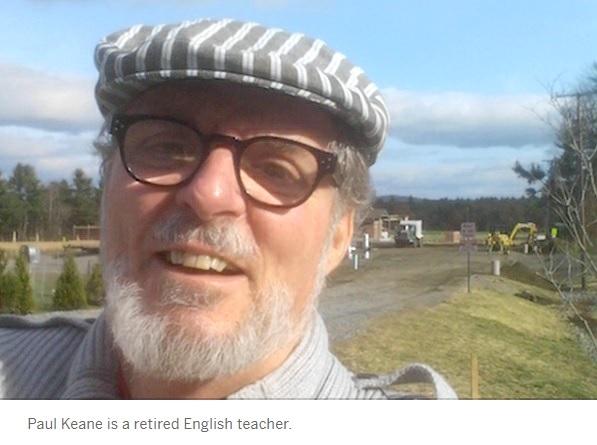
Paul Keane, who attended graduate school at Kent State University, is a retired Vermont English teacher.
 
COPYRIGHT NOTICE

Unless otherwise cited or in the Public Domain,
all material on this website, including all original photos, essays, articles and commentary published herein, are Copyright © 2009-2026 by the Hamden Fire Retirees Association, Inc., and may not be copied or republished in whole or in part without prior written permission of the Hamden Fire Retirees Association, Inc.

Official website of the Hamden Fire Retirees Association, Inc.

Website powered by Network Solutions®